Networked Emergency Response: Finland’s Authorities Work as One
The strength of Finland’s 112 system lies in its ability to operate seamlessly across organisational boundaries. Daily cooperation, shared systems and long‑standing trust between authorities make this integrated model possible.
Emergency response centre (ERC) operations in Finland are one of a kind. Nowhere else do emergency response centres and safety authorities work together as seamlessly as they do here. The system includes all 112 operators: Emergency Response Centre Administration, the police, rescue services, social welfare and health care services and the Border Guard.
ERC’s are able to reach all emergency response authorities via a shared radio network. All necessary authorities can be dispatched simultaneously.
The ERC data system ERICA includes automatic geopositioning of the caller, integrated risk analysis, integrated communication tool (phone, TETRA radio, emergency SMS), real-time response time of units and dispatch calculation (response proposal).
The six emergency response centres in Finland work in a networked model. The calls overflow in two phases: in the first phase between ERC pairs, in the second phase between all ERCs. The networked information system enables optimal use of the resources of the emergency response centres and enables obtaining real-time situational picture of the internal security in the whole country in a centralized manner.
Daily cooperation between authorities is facilitated by shared technology, such as the authority radio network (VIRVE) and the emergency response centre information system (ERICA). Both daily cooperation and larger policies are developed in cooperation groups.
Unique model of training
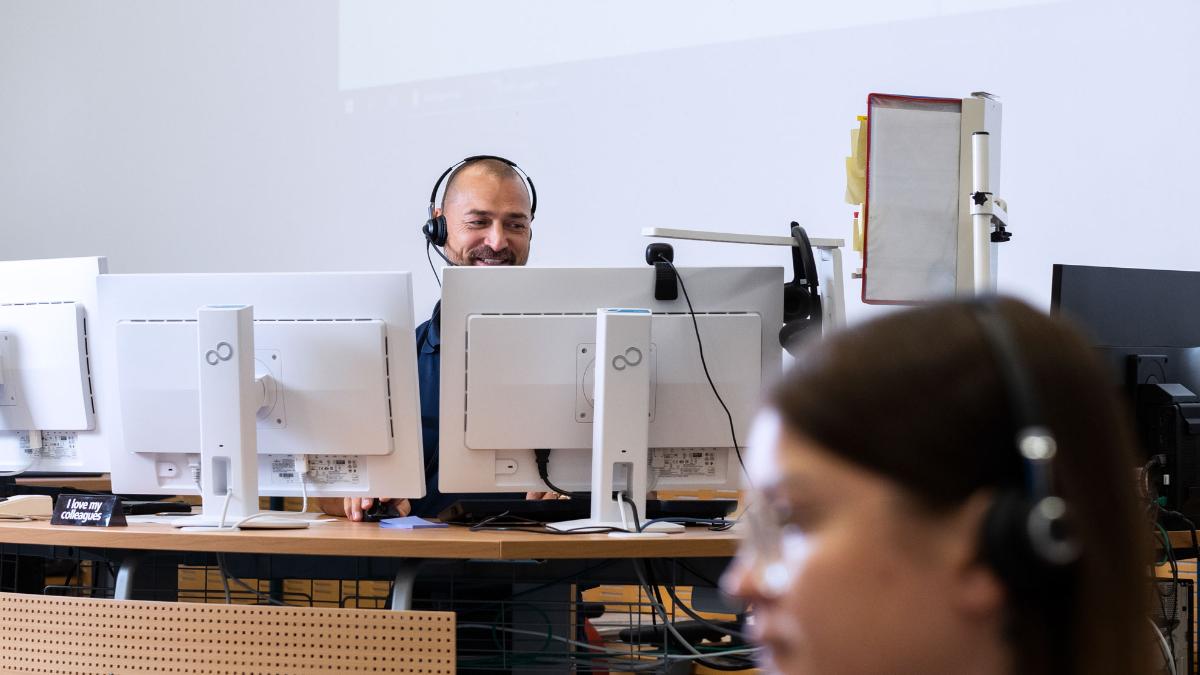
Finnish ERC operators are among the best educated in the world. The same operator receives the call, takes care of the geopositioning and risk-assessment, dispatches the units, gives instructions to the caller and is in contact with the dispatched units over the radio.
The ERC operator degree training is free of charge for students, and the duration is 1.5 years. The training is carried out by the Emergency Services College, which operates under the Ministry of the Interior.
Long-standing trust
The effectiveness of Finland’s 112 system is not the result of any single tool or organisation, but of continuous cooperation between all authorities. Daily joint practices, shared systems and long‑standing trust ensure that help reaches people quickly and reliably.


