Reliability in all circumstances
The Emergency Response Centre Agency is focusing on preparedness. Technical solutions, expertise and cooperation are the building blocks of overall preparedness.
As the operating environment and the general global situation changes, there is an increasing focus on preparedness throughout society. In this regard, the Emergency Response Centre Agency is no exception, but the focus of preparedness efforts is slightly different due to the basic duties of the Agency. Preparedness for emergencies at the Agency is focused on the physical protection of our premises and our auxiliary systems and arrangements, among other things. Operations during disruptions have been taken into account in the design of the premises solutions at the Emergency Response Centre Agency, and, in deed, operations are primarily managed out of protected facilities.
In particular, the Agency is prepared for cyber threats, telecommunications or energy supply disruptions directly or indirectly affecting its key information systems and threats to its premises or staff. Preparedness planning at the Agency aims at combining the actual emergency plan and continuity plans in place in case of disruptions. The aim is to build operating models that can be applied in an agile way in different situations. The networked operating model is also a key tool for the Emergency Response Centre Agency in the event of various disruptions.
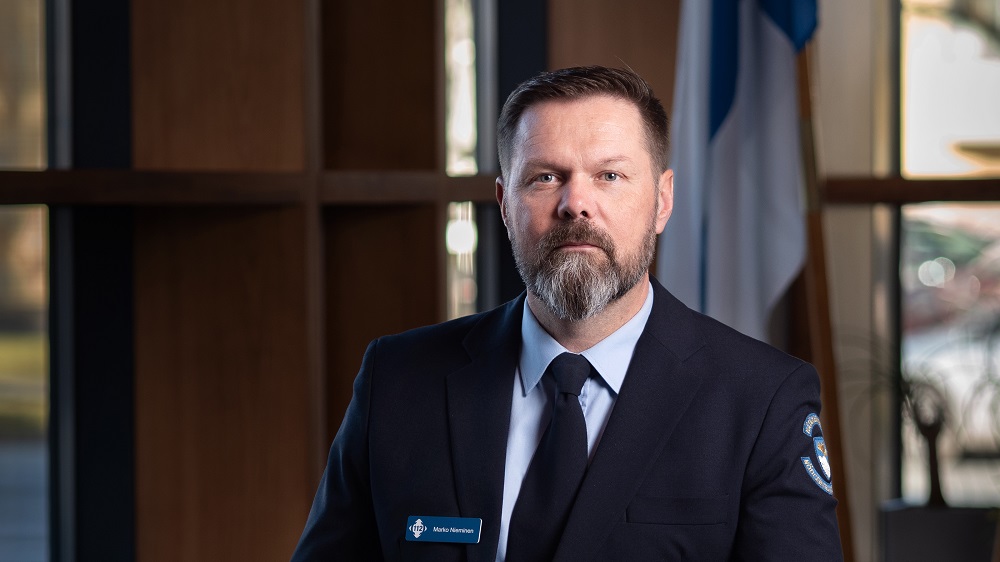
─ “Our technical solutions have been implemented in such a way that operation would be possible for as long as possible even in exceptional circumstances. Our operating processes and operational instructions have been created in such a way that there is no need to change operations in crisis situations,” says Director of Preparedness at the Emergency Response Centre Agency Marko Nieminen.
The continuous maintenance and development of staff competence provides the basis for managing and recovering from various crisis situations. All this is the result of determined development carried out in the long term.
─ “In many ways, 2018 was also a significant year for preparedness in the Emergency Response Centre Agency, as that is when we implemented our networked operating model and established a command centre to coordinate emergency situations, for example. Both of these developments significantly improved the Emergency Response Centre Agency's preparedness capabilities,” Nieminen adds.
Preparedness and contingency planning are increasingly visible in the Agency, and from April 2026 onwards, the Agency will have a separate preparedness, premises and security and safety unit. A range of comprehensive security and preparedness activities have been centralised to the new unit. The four-person unit is responsible for providing services related to preparedness, comprehensive security and preparation as well as facility management.
To support the implementation of preparedness and contingency planning, a separate preparedness team has also been appointed in the Emergency Response Centre Agency to support the decision-making of the Director General in various preparedness-related situations and to review the Agency's preparedness plan annually and assess the need for updating it. The preparedness team compiles the situational picture of preparedness and contingency planning and prepares and reviews any related reports. The team also reviews preparedness presentations and observations made during exercises.
System redundancies and alternative approaches provide the basis for incident management
In its core tasks, the Emergency Response Centre Agency is largely dependent not only on the service provision capabilities of telecommunications operators, but also technologies and various systems. The ERC information system ERICA has redundancies on multiple levels. Telecom operators have given emergency calls high priority, and efforts are made to secure emergency calls in all situations.
─ “Emergency Response Centres fall outside the scope of planned power outages, and if electricity supply were to be disrupted for other reasons, auxiliary power generators and UPS systems would be deployed,” Nieminen says.
As concerns the VIRVE network, the Agency has agreed on procedures on dealing with incidents with sectors in advance. Preparedness is also supported by various other auxiliary systems.
“Alternative or contingency arrangements must also be planned for different situations. This also requires plenty of planning and agreements with, for example, different authorities, including management and leadership during incidents. Now that most authorities have their own networks of command and control centres, there is a good basis for promoting the flow of information in these situations. We are currently working on which connections are needed in case of disruptions and which of them are best suited for cooperation,” Nieminen says.
Competence and training strengthen staff preparedness in crisis situations
Well-managed preparedness is reflected to the public in the ability to maintain service provision without interruption. Preparedness is also about communicating to build trust in emergency services in all circumstances. The 112 Suomi app is also part of overall preparedness.
─ “The app is constantly being developed, and it is another channel to provide the public with information on preparedness, e.g. in the form of offline instructions. All of this increases trust in our agency and in the crisis resilience of authorities,” Nieminen points out.
Staff are supported in their preparedness first and foremost through skills development.
─ “When you feel that you know what you are doing, unexpected situations will not cause stress. We have strived to hold regular safety and evacuation drills to establish the necessary routine. We have succeeded at least reasonably well,” Nieminen adds.
An ever-changing operating environment
There are no new threats directly affecting emergency services at the moment, but the overall security situation is constantly changing.
─ “We need to pay more attention to different hybrid influence scenarios or direct or indirect cyber threats. We must keep conducting drills at different levels and also try to improve our situational awareness,” Nieminen stresses.
One key development relates to the Agency's ongoing premises programme. Thanks to the new rock shelters, the Agency will be able to improve physical preparedness and the overall physical security of its premises. Nieminen also has a message for the public.
─ “The Emergency Response Centre Agency has taken preparedness seriously and is working to safeguard emergency response centre services in all circumstances. However, the authorities cannot stretch their limited resources to cover all situations, which means that everyone needs to contribute to preparedness. In addition to individual preparedness, I emphasise community and caring for others – loved ones, neighbours and especially those who may not have the ability to look after themselves.”
─ “As far as our partners are concerned, cooperation at different levels must be constantly developed. A lot of joint planning is needed, for example to share and analyse situational data between different operators. We need joint communication to maintain mental resilience in society and to clarify roles and areas of authority for citizens, as well. The use and development of different command and control centres for incident management is crucial. If legislation includes unnecessary barriers to cooperation and information exchange, we must be able to remove them by developing regulation,” Nieminen concludes.


