
eCall offers safety in situations where the driver cannot call for help
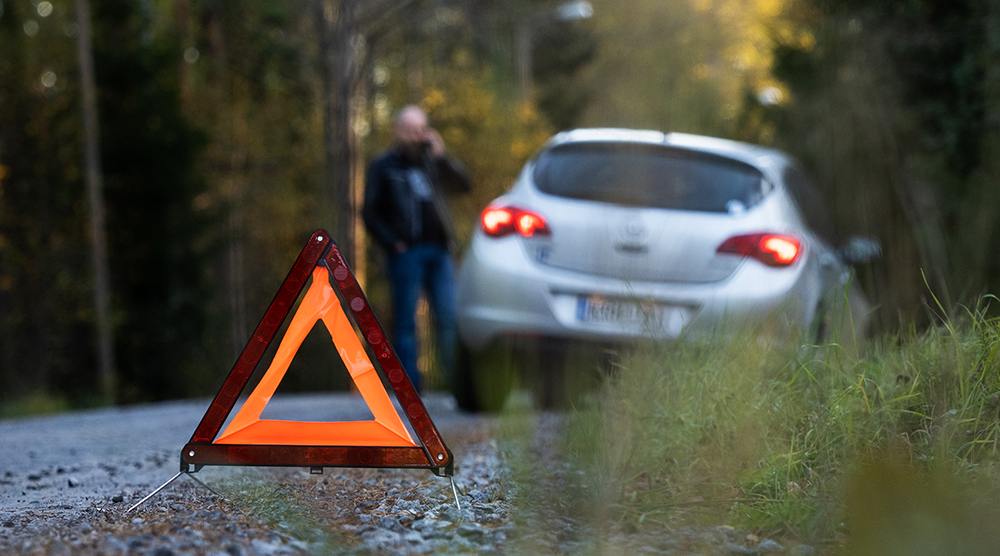
There has recently been discussion in the news about automatic emergency call systems in vehicles. The Europe-wide eCall connects directly to the nearest emergency response centre and sends information directly to the centre's information system.
A vehicle is involved in an accident when all of a sudden, its phone system begins to speak in English – what is it all about? Recently, there have been several examples in the media of situations where a vehicle manufacturer's own emergency call system has activated and connected to the manufacturer's service and on-call centre. In such situations, the operator often speaks English, and if there is a real need for assistance at the site, details of the accident are forwarded to Finland to the international line of the Emergency Response Centre Agency. These calls are answered at the Emergency Response Centre Agency's command centre, which transfers the call to the regional emergency response centre based on the location of the accident if necessary.
Unlike vehicle manufacturers' own emergency call systems, the standardised eCall connects directly to the nearest emergency response centre. The voice connection can be activated when the vehicle suspects an accident, such as due to a collision, but it can also be activated manually. In addition to opening a voice connection, eCall sends a data packet to the emergency response centre with information on the vehicle's direction of travel, location, type and whether the alarm was made manually or automatically. This information is especially valuable when the driver is unable to speak.
− "If a voice connection can be established, a risk assessment of the call is carried out normally. If voice communication with the vehicle cannot be established, separate instructions have been defined together with various authorities," says Marko Nieminen, Director of the Operations Department of the Emergency Response Centre Agency.
The Europe-wide eCall was introduced in Finland in autumn 2017 in accordance with EU legislation, and the service became mandatory after March 2018 for type-approved cars and vans. Between January and June 2023, the emergency response centre received more than 1,900 emergency calls via the eCall system, of which approximately 400 led to an official response. In other words, about 1,500 of the calls at the start of the year were unfounded.
The technology supports but does not replace the professional skills of the ERC operator
An accident on a busy route may result in dozens of emergency calls before the first authorities arrive at the destination. Most of them, unfortunately, come from passing cars. If a vehicle involved in the accident is equipped with the eCall system, information about at least one party to the accident can be obtained through a data link and possibly even a voice connection. The other vehicle may have the vehicle manufacturer's own emergency call system, in which case an emergency call via international channels can be expected.
When receiving an emergency call, the ERC operator is required to evaluate the information given in the call, compare it with previously received information and assess its impact on the response of authorities called to the scene. Information can come from many different sources, and the ERC operator's discretion plays an important role in the assessment. The technology is helpful especially in cases where the person in need of help is unable to speak. However, various alarms caused by sensors or buttons also pose challenges to the authorities if it is not possible to establish voice communication with the scene.
− "The Emergency Response Centre Agency has a significant role in allocating resources to emergency authorities. For this reason, it is essential to identify overlapping and accidental emergency calls in order to avoid unnecessary false alarms," Marko Nieminen adds.
Because there are numerous services offered by vehicle manufacturers in addition to the eCall system, it is a good idea for drivers to check with the vehicle's importer where the vehicle's emergency calls are connected. In the event of an accidental alarm, it is important to wait for the voice connection to open so that the response centre is aware that the call was accidental and there is no need for help.
Technology to transfer alarms from vehicle manufacturers' emergency call systems directly to the ERC's information system without intermediaries is also one area of development and already the practice in some countries. In addition to cars, various automatic emergency call systems can also be found in motorcycles. The trend seems to be that such systems are being developed also for other vehicles that connect to the driver's mobile phone.


